
By Porter Anderson | @Porter_Anderson
From September 6, 2012
Part of my series of columns on publishing, Writing on the Ether, appearing Thursdays at the invitation of Jane Friedman at JaneFriedman.com
 Seasons in Love by Dave Malone
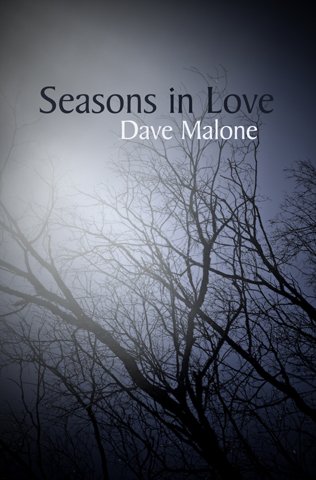
Poems rich in romance, life, and nature, Seasons in Love journeys through four seasons and through love that breaks and sustains us.
Ozark summer heat to winter blizzards, long-lasting love grips these poems. With words and language from southern Missouri hills, Malone takes us into the romantic backwoods of moon, creek, and mountain, but ultimately leads us to life — “it’s blue light, barely seen.”
Fraudulent Reviews: Beside the Point / Howse, Duns, Retzenbrink, Charman-Anderson, “Robin Reader”
Calm down. Authors who give their own books glowing reviews are nothing new.
I’d hoped not to lead this week’s Ether with this fraudulent reviews business. But look at those two sentences above.

They’re the work of Christopher Howse at The Telegraph. His story is called Ignore the sock puppets, they won’t bite you.
His take on the widening scandal reveals a peculiar division showing up in the industry! the industry! — not one we might have expected to see in a business already ragged with the disruption of the digital dynamic.
Here’s another snootful of his write:
This is “fraudulent and damaging to publishing”, say a small battalion of well-known authors – Joanne Harris, Ian Rankin, Susan Hill, and dozens more – in a letter to the Telegraph. Come off it. That is naivety taken to a self-deluding extreme.

Howse and those who agree with him seem to be bent on dodging and diminishing what others see as an outright crisis. The Howse camp uses lines such as “nobody trusts online reviews anyway” and “this has been going on for years” and “why are you so surprised?” And they seem surprised, themselves, to find others taking the problem seriously and talking of how it has defrauded readers, authors, and — as the largest retailer — Amazon.
These infractions can occur anywhere online, of course, but it is Amazon that has championed the consumer review as a substantial element of online commerce.

Indeed, as The Bookseller’s The Naked Book show went live Wednesday afternoon Eastern time (evening in London where it originates), it was frustrating to hear hosts Philip Jones and Sam Missingham have to punch their way through some of the paper-tiger arguments that continue to spring up around these issues.
The Naked Book was a much-improved event this week. A manageable two guests — not four — were on-hand to talk about the issue.
One of them is Cathy Retzenbrink of Quick Reads.

In an interesting moment near the end of the program, she proposed “a kind of amnesty” for authors who are participating in fraudulent review practices. It’s hard to know how much support she might find for such an idea.
The other is author Jeremy Duns, who has become something of a spokesman for an effort to get a handle on the fraudulent-review scandal.

Duns, author of May’s The Dark Chronicles: A Spy Trilogy, is the writer who has called out British author RJ Ellory for “sock puppetry” — the use of fake IDs to pose as a customer and write reviews. And Duns has helped put together the No Sock Puppets Here Please site that’s attracting the support of many writers who want to condemn these practices.
In her write at Forbes, Amazon Reviews: RJ Ellory Apologises for Fakery, Suw Charman-Anderson points out that in the UK, consumer protection laws put into place in 2008 do make the practice of leaving fake positive reviews illegal. It’s termed “astroturfing.” She writes:
Authors who astroturf, as the practice of leaving fake positive reviews is called, need to be aware that their actions are illegal in the UK and could result in an unlimited fine and up to two years in jail.
@lizcastro How would you translate "sock puppet" into Spanish and Catalan?
— Julieta Lionetti (@JulietaLionetti) September 4, 2012
“Janet,” the blogger also known as Robin Reader at Dear Author, includes in The perils of paid-for reviews some commentary on the Federal Trade Commission and its latest update (2009) to guidelines on endorsements and testimonials. And she makes a great point about why things in this area can look murky:
Before the Internet, advertisements and product endorsements were more easily distinguishable from independent, critical reviews of products. However, online commercial venues like Amazon have complicated that distinction, because it can be difficult to tell whether the person writing the review is a disinterested user or a paid promoter.
But as she points out in her piece, the act of critical review is freighted with considerations of free speech — and this further complicates these issues.
Critical distance is good, not only because it encourages honest feedback on books, but also because it protects the freedom and integrity of book reviewing more generally. While authors and publishers might think of honest book reviews as marketing, at best that marketing is indirect, because there is a serendipitous commercial advantage to the word of mouth reviews can generate.
The sock puppet in the kitchen with a dagger | FutureBook http://t.co/XNkr9JRq
— CatherineRyanHoward (@cathryanhoward) September 5, 2012
Clarifying a few points: What is being discussed?
 To quickly review what’s at issue (so far), there are three types of infraction now being discussed.
- The buying of bogus positive online reviews — this is the practice confessed to by US author John Locke, which we’ve Etherized here and here. As Janet (“Robin Reader”)clarifies in her new post — the first in a series — a paid-for review is “a commercial exchange on behalf of the author.”
- “Sock puppetry” in which an author poses as an online shopper to write positive reviews of her or his own work. This is the infraction Ellory says he has committed (detailed in Charman-Anderson’s write). In this case, the author has a material interest in seeing her or his work enhanced by self-generated reviews.
- And sock puppetry in which an author poses as an online shopper to write negative reviews of other authors, also admitted to by Ellery, whose faux account names are reported to have been “Jelly Bean” and “Nicodemus Jones.” In this case, the author has a material interest in seeing other authors’ work given negative notices, thus, one assumes, limiting competition.
The questions these three forms of fraudulent review bring us to, per Janet at Dear Author, are these:
At what point do book reviews become commercial speech and therefore subject to government regulation? At what point does the FTC decide that there is enough concern about the independent nature of reviews to step into the book blogging world and cast a shadow on the many honest, independent bloggers?
Depressed. My sock puppet finds my new book disappointing.
— Jack Klaff (@jackshebang) September 3, 2012
More clarification: What is not being discussed?
- Is the receipt of a free copy of a book by a reviewer wrong? No. This is common practice throughout the industry, and as long as there is no guarantee that the review copy will prompt a review (nor that such a review might be negative or positive), there is no problem with the review copy of the book being free. Newsrooms are flooded, in fact, with review copies sent strictly on the hope of a review, not the promise. It’s smart for a reviewer, whenever asked, “May I send you my book?” to clearly state that if an author does send a copy of the book, there’s no guarantee of a review or of what kind. But the use of free review copies is not involved here.
- Are Kirkus Reviews part of the problem? No. Again, both by tradition and by clarity of policy — a Kirkus review is paid for, but the crystal clear understanding is that there’s no guarantee the review will be positive.
So much more than sock puppetry: in defence of reader reviews http://t.co/XwM9OqHL #books
— Guardian Books (@GuardianBooks) September 6, 2012
What is at issue, then?
Any form of commentary that might affect an online sale or ranking of a product when that commentary is not the free-will, no-relation (unbiased), unpaid-for comment that it appears to be represents a conflict of interest. The fear among many in the community is that such bad practice is so widespread that a major element of online commerce — and of readers’ participation in publishing, let’s face it — is damaged beyond salvage.
https://twitter.com/jeremyduns/status/244467955256160259
@jeremyduns Keep on witch hunting, Duns! It gets your name in the papers!
— JA Konrath (@jakonrath) September 8, 2012
Do you write reviews of books on Amazon?
Great. If you have a relationship of any kind with an author that might have something to do with what you say in your review — or that might appear to bias you (the “appearance of conflict of interest”) — you simply disclaim it right up top, very briefly.
For example:
“I am a colleague of several years of Author XYZ and we are frequently in touch on social media. I consider Author XYZ a friend.” You’re done. Now write your review. No need to go on about how your friendship isn’t going to have any impact on what you say — you’re human, and it’s fine to have relationships. You’ve just need to state them, giving your review reader a chance to decide how to evaluate your review.
 And because I’ve actually had someone ask me why this is wrong, here’s what you say to someone who wants to dismiss it:
- It cheats readers, first of all: they need every chance to make good decisions about whether to buy and read authors’ work.
- It also cheats authors: they need a chance to have the rankings and positioning that can be affected by reviews work as cleanly as possible.
When you game any system, someone is getting the short end. The folks saying, “There’s no victim in this” are wrong. We’re all victimized by it, whether buying books or toasters.
The retailer
And that gets us to the last point we need to mention here on this: the retailer. Some are pessimistic that Amazon and/or other online retailers will try to address this, stepping up fake review detection, moving against violators of their terms of service, etc. Others are optimistic.
For Duns’ part, he tells of being disappointed in his initial efforts to be in touch with Amazon about his experiences. And in the Naked Book discussion, he states the question cleanly: “What is the point of having policy guidelines if they’re not actually enforced?”
Click to read this week’s full Writing on the Ether column at JaneFriedman.com.
Kobo Unveils New E-Readers, Glo and Mini, and Arc Tablet,by Jeremy Greenfield/DBW
http://t.co/1AuOTGEI— Jose Afonso Furtado (@jafurtado) September 6, 2012